Tl/Dr: the smallest change isn't one to the laws of physics. It's a small change to the definition of magic.
This is a favorite topic for me. I could talk for hours about it. Not kidding. Find me in chat if you want. There's more magic in the world than we often think!
Let's start off slow, with the straight forward physics part of the question.
Why I cannot do magic for real?
I answered: because of law of conservation of energy! And I briefly
explained this law.
Thus she grumbled "a single law stole us so much!"
Let's take this one apart. Few people know this, but conservation of energy is actually dug far deeper into the fundamentals of science than it appears. Emmy Noether, in 1915, proved what is now called Noether's Theorem. This theorem is so profound that not only is it considered the single greatest addition to mathematical physics by a woman, but may consider it to be the greatest addition to mathematical physics period. Her theorem focused on Lagrangian mechanics, which are systems that are path invariant. For example, it doesn't matter if I roll a rock up a hill, or if I simply lift it up and put it there: the potential energy in the rock is identical in each case. Virtually all of modern physics is developed under this assumption. She proved that, if there is a symmetry in the system, there must be a corresponding conserved value, because that conservation law will fall right out of the equations. Thus:
- If you have time invariance (the laws of physics do not change over time), you must have a conservation of energy law.
- If you have a translational invariance (the laws of physics are the same everywhere), you must have a conservation of momentum law.
- If you have a rotational invariance (the laws of physics are the same no matter which way you face), you must have a conservation of angular momentum law.
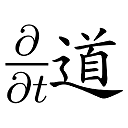
So, by this rule, not only would you have to remove the conservation of energy, but you would have to remove the time invariance of the laws of physics. To have "magic" violate the conservation of energy, we need the rules of physics to change every time we cast a spell. Woof!
Or do we? Noether's theorem works for Lagrangian systems. It doesn't work for other systems, such as those where the path you take matters. What if the path we take does matter? What if the road less traveled really does make all the difference? Suddenly we find ourselves in a different environment, where we didn't even need to change the laws of physics to permit magic, just our preconceptions.
The challenge with "magic" is that much of what we read in fantasy is so, well, fantastical that we develop a definition of magic that is roughly translated as: "magic is the ability to do things you can't do in real life." This is my least favorite definition, and I love encouraging people to shift to another one. This one is a dead end. It always leads to thoughts that start out with "If only I could... but I can't."
I prefer the definitions which push at the possible. In this technological world, it's impossible to provide an answer to this question without quoting Arthur C. Clarke's "Any sufficiently advanced technology is indistinguishable from magic." It's such an over-used trope that we often wave our hand and say "yadda yadda, we've heard this before." However, I'd like to draw attention to one little word in that sentence: "indistinguishable." Okay, fine, it's a big word. Six syllables. His definition of magic doesn't include anything about what the magician is doing. It's about what the audience observes. He points out that, while we often like to separate things into nice easy piles using the law of the excluded middle, such as "magic" and "not magic," it turns out that for some things, it is frustratingly hard to categorize things this way. You really end up needing a third category: "magic," "not magic," and "hmm... maybe magic."
I find this third category to be the key to a belief in magic. Let's take the case of Penn and Teller. You've almost certainly heard their names, as two of the most respected illusionists in the magic industry. They've been at it for 45 years, and have seen it all. In fact, they've seen too much. For a few seasons, they hosted a show "Penn and Teller: Fool Us," with the basic premise of inviting lesser known magicians up onto their stage to do magic for them. The goal is for the magician to "fool" Penn and Teller so that they can't tell how it was done.
What's fascinating about this is the monologue they give to the audience before the show (and by "they" I mean Penn, of course). He explains that, after 45 years of magic, they've seen it all. They know how all the tricks work. And somewhere, along the way, the magic went away for them, and all that was left was the tricks. So while, obviously, the goal of such a show is to make money, like any show, the private goal for them is to come across just one act which fools them so thoroughly that they, for a moment, get to feel the same mirthful feeling of wonder, bubbling up from their gut, that they got from seeing magic when they were five years old. (And, every now and then, they actually got their wish. Warning for you and your 7 year old, video does contain curse words, but watching Penn's face just might be worth it).
As you start exploring these things which are indistinguishable from magic, you realize that they show up all over in the our culture. There's something magical about watching the sun rise. It doesn't seem to quite matter that I know it's caused by a $(7.2921150 \pm 0.0000001) ×10^{−5} \text{(rad/s)}$ rotation of the earth with respect to the inertial frame, and Rayleigh and Mie scattering of photons off of the atmosphere. There's something there which isn't quite captured in the scientific jargon, and is different every day, and yet the same. We see it in live music. We see it in the poet's fascination with love.
I have a young daughter myself. I was there when she was born. I know the biochemistry. I can explain exactly what happens for the first three divisions of the egg after conception (which is the first point where the male DNA is fully expressed. Some scientists consider that to be the moment where it becomes another human being). I can explain exactly which hormones the baby had to emit into my wife's bloodstream to convince her Uterus to let it stick around just a little while longer. I know of that, between stage 28 and 31 of the embryo's eye, it begins a "testing pattern" of sorts, a pattern we literally only see once in our life and never see again, which is responsible for helping sort out the mapping from the optic nerve to the visual cortex. I can tell you that she, as newborn, had roughly 26 billion cells, expelled from my wife's body under the influence of some of the most powerful drugs our body has ever developed.
And you know what? Despite all of that, I'll be damned if I'm to distinguish those 26 billion cells from anything but a miracle. Damned I say. When I watch her stare in marvel at a Gestalt pattern, trying to make sense of what she sees, she's not the only one staring in marvel. I watch her eye darting back and forth, and truly have to question "How could this ever be treated as nothing more than a squishy bag of cells?"
To me, that's the state where magic occurs. Not when you know something is impossible, but when you're not entirely sure. Is the old lady with a Tarot deck simply reading my biophysical tells and telling me what I want to hear in exchange for my money, or does she really know something that I don't?
By "magic" my daughter means any way to obtain a result without any effort.
For example, she would like to cook an egg by magic, or clean up the room by magic, or transform a stone into a car by magic and so on.
"Without any effort" is a hard definition of magic. Many fantasy novels have spells which take a great deal of effort. At the very least, you have to say some words or wave a wand. What does "effort" mean? It takes 10.8 calories per hour to run the human brain, and its hard to say if it burns any more doing heavy thinking. A child at play burns about 400 calories per hour. Ask your daughter which takes more effort: playing on the playground, or math homework.
Some things take very little effort at all, because what we wanted was almost already there. We just had to coax it into being. If there is already an egg, suspended on a string over a pot of boiling water, cooking an egg with a magic wand could take as little effort as waving the wand in a manner which breaks the string, and lets the egg settle into the boiling water. In fact, if she can do this messily enough, there's a good chance a parent will rescue her (and the kitchen), and finish cooking the egg for her! How's that for little effort?
The key to such a sense of magic is sensitivity. Sensitivity to everything in the environment around you. If you'll notice, magicians in the fairy tale books often wont cast a spell unless the time is right for it. I certainly wont be casting my egg-cooking spell unless I notice someone has already decided to suspend the egg over a pot. I'm not going to do a "pull a quarter out from behind your ear" trick unless I'm confident I can palm the quarter there in the first place.
Is it magic? Well, I know the trick, so it's just an illusion to me. However, if I do that to my daughter, and she smiles, that's magical to me! So if I can do an illusion that she thinks is magic, and she can distort her face into a smile, and I think its magic, how badly do we want to draw the lines between the events. Can we just say "Me producing a quarter from her ear causing her to smile" is actually magic? Am I really forced to put a line between those two parts, and make the magic go away?
Where does this all lead? Anywhere you want, really, but I do think one of the most amazing places it leads is into exploring what your body can actually do. It is so much more capable than we think, and its full of magic. For example, you eat food. You can look around with your eyes, process the scene, identify something which contains calories and nutrition, break it up mechanically with your mouth and chemically with your stomach, and extract value with your intestines. Everything I just mentioned is in the upper torso. As far your legs are concerned, the fact that they get calories and nutrients in the blood stream is, well, magical.
Now let's put your legs in a position to be magical. Jump (from a reasonably high height) and land on the ground. One of the first real warnings you get that you hit the ground is a strain in the patellar tendon from being stretched by the lower leg reacting to the ground while the upper leg and rest of body continue downward. Sensory nerve signals travel at 80-120mph. That's about a 80ms round trip from the leg, to the brain, and back, ignoring processing time. If you had to take effort to resolve this situation, you wouldn't have time to innervate your leg muscles fast enough to catch yourself. In reality, with processing time, the numbers look closer to 200 or 300ms.
Instead, the signal takes two paths. One path notifies your brain that something's amiss. The other path goes up your leg, to a ganglia at the bottom of your spinal column. There' it has a monosynaptic link to quadriceps. A monosynaptic link is one where a sensory neuron connects directly to a motor neuron, without any interneurons between to do processing. It's the single fastest link possible in the human nervous system. That link innervates your quadriceps as fast as they possibly can, to catch you. In fact, they are contracting before you are even aware that you hit the ground:
This is known as the Patellar Reflex, and its what the doctor tests when they bump your knee and your leg twitches:
This reflex is a reflex of proprioception which helps maintain posture and balance, allowing to keep one's balance with little effort or conscious thought.
Without even thinking about it, your legs catch you, three to four times faster than you could catch yourself if you expended "effort." Without them "thinking" about it, they are provided with the nutrients and energy needed to make that trick possible. By the way, while the patellar reflex is the best known of these, many other tendons exhibit a similar reflex, such as the ankle and elbow. Every one of these does something you couldn't do with effort if you tried.
Do I really have to say that's not "magic?"





















151Remember what Arthur C. Clarke taught us: "Any sufficiently advanced technology is indistinguishable from magic." Amaze you daughter with the wonders of the science and technology (I suggest the use of magnets) and you will grow up a curious person. =D – JordiVilaplana – 2016-04-29T10:32:19.417
19Your edit invalidates my answer somewhat, and also invalidates some famous depictions of magic. Magic is not effortless. – cst1992 – 2016-04-29T15:16:34.257
32Conservation of energy is not that important for having magic. The spell might draw the required energy from somewhere else, not necessarily create it from nothing. – vsz – 2016-04-29T20:00:46.813
3
It should be noted that energy conservation does not hold in general relativity, and we don't see magic there, so it's not like it's an absolutely vital component.
– Akshat Mahajan – 2016-04-29T20:10:01.8801@sumelic, agreed, and since we have free will we can violate the conservation laws. For example, we regularly reverse the flow of entropy. Just in typing this message I am doing so. I am creating an extremely improbable configuration of letters with high frequency. Entropy says systems tend towards highly probable configurations, and writing this message is a highly improbable configuration. So I just broke a law of physics right here. – yters – 2016-05-01T21:17:25.917
8@yters: That's not what it means to break a law of physics. Increase of entropy is a overall trend; it applies to a physical system as a whole, not to each individual part of a system. Your body and brain must be functioning in order for you to type this message. They are sustained by your metabolism. And your metabolism turns chemical energy into heat, thereby increasing entropy. It's possible to reduce entropy in a particular area, but only by increasing entropy overall. – sumelic – 2016-05-01T21:29:25.370
2As a counterpoint, magic in the Dresden Files by Jim Butcher conforms (within literary reason) to thermodynamics: if he wants to generate an effect of some sort, the requisite energy must come from somewhere and he has to do work to reverse the local entropy. No free lunch for Harry Dresden, or for magicians/wizards in many other imagined universes. In that sense, magic isn't impossible, we just call it technology instead. Two hundred years ago we'd all be burned for witchcraft, sending these letters instantly to each other through our unnaturally lit typewriters. – Asher – 2016-05-02T01:06:41.673
1@sumelic, you may be right and I may be wrong, but this shows it is coherent to talk about free will breaking the laws of physics because we are disagreeing over whether it does in this specific case. So, a minimum requirement for magic to exist is if free will can break the laws of physics. – yters – 2016-05-02T02:31:26.670
2You cook an egg with very little effort - compare "putting the egg in a cooker" with "gathering and chopping wood, assembling it into a fire, lighting said fire" and outright "using own effort to cook an egg". There's packaged lunches that self-prepare. There's a lot more effort in cleaning a carpet when you don't have a vacuum cleaner. We're transforming stones into cars all the time - that's how cars are made in the first place (for very loose definitions of "stone" :P). The real magic is technology - giving you more and more for less and less effort. The energy is taken from somewhere else. – Luaan – 2016-05-02T12:12:49.340
21We already can do magic: Things you can do without any effort (or no more than casting a simple spell), that used to require effort: 1) Talk to people hundreds, even thousands of miles away, 2) go up hundreds of stories in a building, 3) Create fire, 4) move horizontally very fast, 80 MPH or more, and for long distances (miles), 5) see things all over the Earth, 6) Learn the answers to most questions of fact (those that have answers), 7) Lift huge rocks and other weights (tons) above our heads, Etc., Etc. ... – RBarryYoung – 2016-05-02T17:23:45.390
1A single footnote in the physics textbook: "does not apply to superman". – JDługosz – 2016-05-03T01:30:03.757
1Just don't tell her about electricity! – colmde – 2016-05-03T13:18:45.433
1It might be worth pointing out that even in the fictional worlds where magic does exist (Harry Potter, Lord of The Rings, Narnia, etc), most of the population of those world can't do magic either. For those that can do magic, it takes many hours of experimentation and practice to figure out how it is done, and even then the powers that are learned are often limited in non-obvious ways. So perhaps the answer is, it is possible to do some magic; you just have to first understand and exploit the laws that govern the behavior of the universe you are located in. – Jeremy Friesner – 2016-05-03T17:38:57.623
4http://lesswrong.com/lw/ou/if_you_demand_magic_magic_wont_help/ and http://lesswrong.com/lw/ve/mundane_magic/ are related - "if you could go down to the zoo, or even to a distant mountain, and meet a fire-breathing dragon—while nobody had ever actually seen a zebra, then our fantasy stories would contain zebras aplenty, while dragons would be unexciting." and "If they actually had magic, it would lose the charm of unattainability. They might be excited at first, but the excitement would soon wear off. Probably as soon as they had to actually study spells." – TessellatingHeckler – 2016-05-03T20:31:54.163
Can we include mind-altering drugs or altered states of consciousness (such as hypnosis) under the definition of "magic"? – RobertF – 2016-05-04T18:51:04.910
I think the Cosmos (2014) would look like magic to her for real. – Joseph – 2016-05-05T09:42:54.313
1Physics is magic! @RBarryYoung Add to that list, use a volume knob, or a computer. Using a small amount of energy to control a large amount of energy is the basis of amplifiers, and of transistors. – jpaugh – 2016-05-05T19:33:57.957
1Magic CAN be done for real. The trouble is no one knows how.
For example, you might desire wingless flight controlled by your thoughts. Thereby you need a device that interfaces with your thoughts and can navigate space and counteract gravity to a controllable extent. Thoughts are material, they require energy and matter. The real question is how to interpret and amplify that energy appropriate to the task at hand. By interfacing with a car engine and steering column through your limbs? – Nomenator – 2016-05-06T14:49:17.973
1Of course we can do magic for real. For example: 100 million people died from smallpox. She — your daughter — cannot die from smallpox, because she has a magical ward in her body... a tiny invisible army inside her body that will attack and kill any smallpox that tries to kill her. For those 100 million people that died from smallpox, this would have been magic. – MichaelK – 2017-09-26T14:29:43.640
@MichaelK Actually, the OP's daughter is vulnerable to smallpox. Smallpox was eradicated by 1979. You need to be in your 40's to have been vaccinated against smallpox. – Martin Bonner supports Monica – 2018-10-04T14:44:57.877
@MartinBonner Polio then... – MichaelK – 2018-10-04T14:50:13.640
1Kids really are the best sources for motivational creativity ... or creative motivation ... or ... they inspire creativity more betterest – Dalila – 2018-10-22T21:15:45.913
Most of the answer almost touch the point that it is not a change to physics, but rather a change to biology: halt human cognitive development, and just anything in the world becomes magic. – NofP – 2018-11-23T09:06:58.600