Top down yields very strong consistency when you look at the world as a whole. However, when you look at the details, it often starts to feel artificial, because the details all seem to be written into the stars.
Bottom up yields a more "realistic" word in the sense that we (currently) believe the rules of the world govern the small things at the bottom and the larger constructs are just results of those bottom features. However, it often proves very difficult to build a "good" world from the bottom up to support your needs. If you "cheat" to get a plot going, bottom up either spirals out of control or turns to useless mud.
Another way to word the same thing is that top-down is good at creating beautiful but inanimate worlds, while bottom up is good at creating living breathing worlds. I like to think along this organic/inorganic line because it gives some hints as to how to answer your third question: yes, you can blend the two. However, I do not have reason to believe there is just one way of doing it, so you have to go out and find your own personal way! To suggest directions to look, consider how we (organic beings) manipulate inorganic tools. HISTORY TO THE RESCUE!
- A swordsman is an organic being that uses an inorganic sword to cut into other swordsmen. One can use a top-down portion of the world to create a tool to allow segments of the bottom-up behaviors that you like to pin down the out of control segments nearby
- A staff can be used to strike or push an opponent. The top-down portion of the world can be designed to nudge bottom-up uglies out of the way without killing them off
- A combat fan looks beautiful, but hides its violent edge. The top-down portion can distract the audience until they reach a point where suddenly they realize that the bottom-down portions are living and breathing and have them in a treacherously dangerous position.
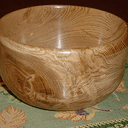
- A potter slowly forms a pot on a wheel. The bottom-up parts can dance around the top down, slowly molding it into a desirable shape
Humans have been interacting with inorganic things and eachother for so long, it forms a good source of inspirations for new ways to weave top-down and bottom-up thinkers together.
This view has one drawback: it always is from an organic perspective, because we usually think of inanimate objects as not having any "will," so they just sort of sit there as the organic being wields it. However, if we draw from fantasy, this drawback goes away:
- A devlish sword convinces its owner to draw it. The top-down portion of the world begs the bottom-up portion to sharpen it, draw it, and use it.
- A magic mirror slowly deceives its owner. The top-down portion draws the bottom-up portion into a position where it can suddenly ensnare the bottom up portion and begin building the world outward from it


I'm not sure if this question has an answerable interpretation that most people will understand the same way. I didn't vote for close (yet), but this may be much broader than intended. General and specific are relative and can be applied to a lot of concepts on a lot of different levels of abstraction. Worldbuilding refers to all kinds of things from landscapes over magic, sciences and species, up to politics and the like. I'd guess this problem should have something to do with limiting discarding due to conflicting constraints, but I might be on a totally different page. – Vandroiy – 2014-11-04T23:08:28.967