23
1
Challenge
Given a list of positive integers, find if there exists a permutation where taking up to one bit from each of the integers, a binary number consisting of all 1s can be created.
The number of bits in the resulting binary number is equal to the highest MSB in the list of integers.
Output
Your code must output or return a truthy/falsey value indicating if such a permutation exists.
Examples
Truthy:
With the list [4, 5, 2], and its binary representation [100, 101, 10], we can use the third, first, and second bits, respectively, to create 111:
4  ->  100  ->  100  ->  1
5  ->  101  ->  101  ->    1
2  ->  010  ->  010  ->   1
Result                   111
With the list [3, 3, 3], all of the numbers have both first and second bits set as 1, so we can take our pick with a number to spare:
3  ->  11  ->  11  ->  1
3  ->  11  ->  11  ->   1
3  ->  11  ->  11  ->
Result                 11
Falsey:
With the list [4, 6, 2], none of the numbers have the first bit set as 1, so the binary number cannot be created:
4  ->  100
6  ->  110
2  ->  010
With the list [1, 7, 1], only one of the numbers has the second and third bits set as 1, and the number cannot be created:
1  ->  001
7  ->  111
1  ->  001
Obviously, if the maximum number of set bits exceeds the number of integers, the result number can never be created.
Test cases
Truthy:
[1]
[1, 2]
[3, 3]
[3, 3, 3]
[4, 5, 2]
[1, 1, 1, 1]
[15, 15, 15, 15]
[52, 114, 61, 19, 73, 54, 83, 29]
[231, 92, 39, 210, 187, 101, 78, 39]
Falsey:
[2]
[2, 2]
[4, 6, 2]
[1, 7, 1]
[15, 15, 15]
[1, 15, 3, 1]
[13, 83, 86, 29, 8, 87, 26, 21]
[154, 19, 141, 28, 27, 6, 18, 137]
Rules
Standard loopholes are forbidden. As this is code-golf, shortest entry wins!

Antti29
Posted 2017-11-06T05:56:37.840
Reputation: 939




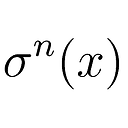











There's a theorem that might help with this…
– Not a tree – 2017-11-06T06:25:23.123Welcome to PPCG! Nice first challenge! – Mr. Xcoder – 2017-11-06T06:54:16.200
@Notatree: Well, how nice. I can use the shortest code to find me a wife. – Antti29 – 2017-11-06T06:55:47.167
Added to my index of graph problems as bipartite matching. – Peter Taylor – 2017-11-06T09:04:04.050